
Capo Spartivento



Costruito nel 1854 dalla Marina Militare Italiana, il Faro di Capo Spartivento fu uno dei venti fari reali voluti da Vittorio Emanuele di Savoia, le cui iniziali capeggiano ancora nel fregio in ferro battuto che sovrasta la porta d’ingresso. Mitragliato dagli aerei americani durante la Seconda Guerra Mondiale, l’edificio subì al termine del conflitto il suo primo e unico restauro. Ospitò la famiglia dei faristi fino agli anni ‘80, quando l’automazione spazzò via i cambi della guardia.
Caduto nell’oblio per oltre 30 anni, nel 2006 ha inizio la seconda vita del Faro. Una metamorfosi iniziata molti anni prima, un sogno d’infanzia a lungo riposto nel cassetto, un progetto ambizioso divenuto realtà grazie alla passione e alla dedizione di chi ci ha messo la testa, e l’anima. A tracciare ancora una volta la rotta, il Faro Capo-Spartivento è oggi il primo e unico faro in Italia destinato all’accoglienza, premiato dai vertici della Marina Militare Italiana come esempio di recupero di architettura militare.
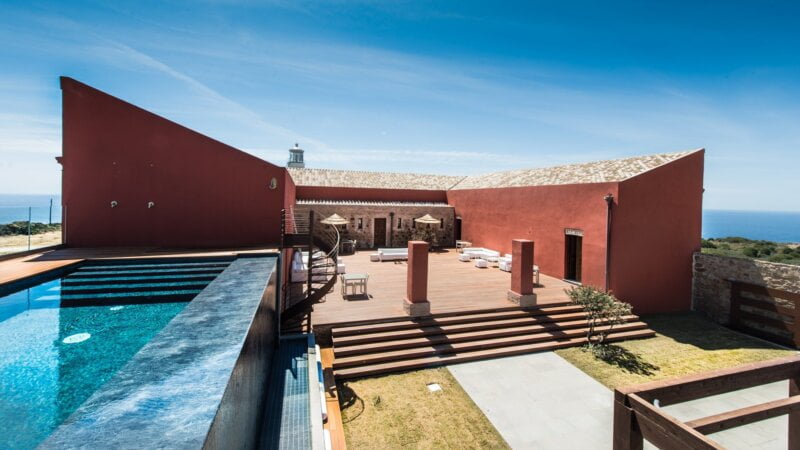
Prenota ora la tua esperienza > IL PROGETTO DI RECUPERO DEL FARO. Conservare il fascino di un faro mediterraneo, intervenendo con discrezione e stile, nella distribuzione interna ed esterna, sui materiali e sugli arredi, in modo da renderlo al tempo stesso un esempio di stile mediterraneo minimale. L’opera di restauro conservativo del Faro, durata otto lunghi anni, è un intervento sostanziale e al contempo rispettoso, che trasforma profondamente la destinazione d’uso dell’edificio, nel riguardo della memoria storica di un luogo che appartiene alla collettività.
Il risultato finale è un progetto in cui ambiente, architettura e turismo si incontrano, attraverso l’uso esclusivo di materiali locali e l’applicazione dei principi della bioedilizia. Pietra, granito, basalto, ferro battuto, legno e acqua di mare disegnano le linee interne e i profili esterni del Faro Capo-Spartivento. L’acqua calda e l’energia elettrica sono prodotte attraverso l’utilizzo di pannelli fotovoltaici. Un dissalatore consente di utilizzare l’acqua di mare per le normali funzionalità della struttura, mentre un impianto di fitodepurazione permette il recupero delle acque reflue per innaffiare il giardino.
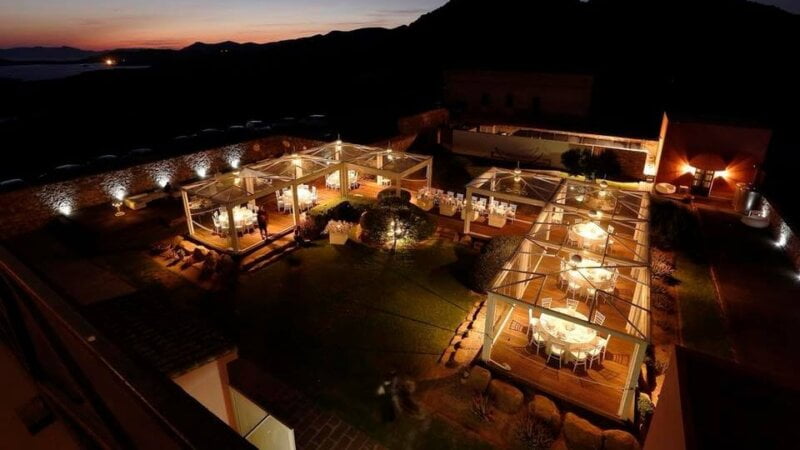
La sapiente revisione degli spazi, in funzione di un differente utilizzo dell’edificio, dà vita a un nuovo concetto di Faro, una struttura non più proiettata esclusivamente verso il mare, ma anche verso l’entroterra. Ne deriva una perfetta armonia con il contesto. Di giorno domina la natura, di notte il faro risplende in tutta la sua bellezza, in un fitto dialogo tra la luce della lanterna e il gioco di luci, artificiali e naturali, che anima la proprietà. Il Faro Capo-Spartivento è un’architettura di luce, in cui continua ad ardere il fuoco che da oltre 160 anni illumina il cammino dei naviganti.
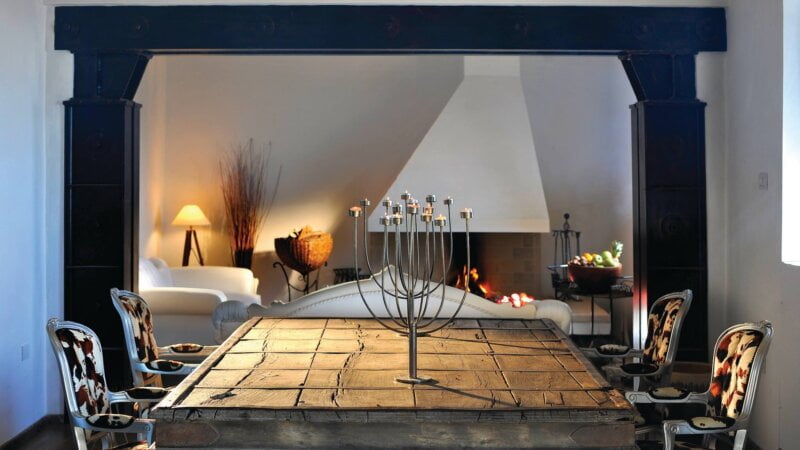
Il bianco minimalismo degli ambienti interni e le linee essenziali degli spazi esterni fanno da sfondo a un universo di pezzi unici provenienti da luoghi ed epoche diverse. A chi le sa ascoltare, gli oggetti e i materiali hanno storie da raccontare, storie di terre lontane e di antiche maestrie artigiane, storie uniche, come quella del Faro che abitano. Nella magia di Capo Spartivento, la colazione a bordo piscina si consuma su antichi fondi di carro turchi, un maestoso baule indiano custodisce i libri della sala da tè, nei bagni al piano terra i lavabo poggiano su un antico mortaio mongolo e la cornice di uno specchio cela 42 timbri indiani, utilizzati per stampare i tessuti.
In un raffinato equilibrio, questi manufatti unici si affiancano a oggetti di design come i lampadari rossi in cristallo di Murano o le sedute in pelle bianca stile Luigi XIV che troviamo nel salone. Senza mai perdere di vista l’orizzonte, che si staglia seducente oltre le finestre, ogni dettaglio nel Faro è un chiaro omaggio alla passione per il Viaggio.
Built in 1854 by the Italian Navy, the Capo Spartivento lighthouse was one of the twenty royal lighthouses wanted by Vittorio Emanuele of Savoy, whose initials still lead in the wrought iron frieze that dominates the entrance door. Machine-gunned by American planes during the Second World War, the building underwent its first and only restoration at the end of the conflict. It housed the lighthouse family until the 1980s, when automation wiped out the changing of the guard.
Fallen into oblivion for over 30 years, in 2006 the second life of the Lighthouse began. A metamorphosis that began many years earlier, a childhood dream long placed in the drawer, an ambitious project that became reality thanks to the passion and dedication of those who put their head and soul into it. To trace the route once again, the Capo-Spartivento lighthouse is today the first and only lighthouse in Italy intended for hospitality, awarded by the leaders of the Italian Navy as an example of recovery of military architecture.
Preserving the charm of a Mediterranean lighthouse, intervening with discretion and style, in the internal and external distribution, on the materials and on the furnishings, in order to make it at the same time an example of minimal Mediterranean style . The conservative restoration work of the lighthouse , which lasted eight long years, is a substantial and at the same time respectful intervention , which profoundly transforms the intended use of the building, with regard to the historical memory of a place that belongs to the community.
The final result is a project in which environment, architecture and tourism meet , through the exclusive use of local materials and the application of the principles of green building . Stone, granite, basalt, wrought iron, wood and sea water draw the internal lines and external profiles of the Capo-Spartivento lighthouse. Hot water and electricity are produced through the use of photovoltaic panels. A desalinator allows the use of sea water for the normal functions of the structure, while a phytodepuration system allows the recovery of waste water to water the garden.
The skilful revision of the spaces , according to a different use of the building, gives life to a new concept of Faro, a structure no longer projected exclusively towards the sea, but also towards the hinterland. The result is perfect harmony with the context. During the day it dominates nature, at night the lighthouse shines in all its beauty, in a dense dialogue between the light of the lantern and the play of lights, artificial and natural, which animates the property. The Capo-Spartivento lighthouse is an architecture of light, in which the fire that has illuminated the path of sailors for over 160 years continues to burn.
The white minimalism of the interiors and the essential lines of the outdoor spaces are the backdrop to a universe of unique pieces from different places and eras. To those who know how to listen to them, objects and materials have stories to tell, stories of distant lands and ancient craftsmanship, unique stories, such as that of the lighthouse they inhabit. In the magic of Capo Spartivento, breakfast by the pool is eaten on ancient Turkish wagon bottoms , a majestic Indian trunk holds the books in the tea room, in the bathrooms on the ground floor the sinks rest on an ancient Mongolian mortar and the frame of a mirror conceals 42 Indian stamps , used to print fabrics.
In a refined balance, these unique artifacts are placed side by side with design objects such as the red Murano crystal chandeliers or the Louis XIV style white leather seats that we find in the lounge. Without ever losing sight of the horizon, which seductively stands out beyond the windows, every detail in the Lighthouse is a clear tribute to the passion for travel.